In the high-stakes world of industrial services, a variance of 0.001mm is the difference between an aerospace triumph and a catastrophic failure. You spend decades perfecting your workshop, your tolerances, and your supply chain. You know that mechanical engineering websites and the firms they represent live and die by the precision of their output.
Yet, when it comes to your digital presence, that same obsession with precision often vanishes. Most engineering websites today are “spec-sheet heavy” but “strategy light.” They act as static brochures that list every CNC machine in the workshop but fail to answer the critical question every procurement officer is asking: “Is this firm a reliable partner or a digital liability?”
The Stats That Define the Modern B2B Landscape
The numbers don’t lie. According to the 2025 B2B Digital Procurement Report:
- 67% of the buyer’s journey is now completed digitally before a prospect ever reaches out to your sales team (Source: HBR).
- 84% of B2B technical buyers state that a vendor’s website is the most influential factor in their initial “trust audit.”
- A 1-second delay in mobile load time can result in a 7% reduction in conversions. For a $1M enterprise contract, that 1-second delay is a $70,000 mistake.
If your engineer website looks like a legacy system from a decade ago, you aren’t just losing traffic, you are failing the test before it even begins.
1. The “Invisible Audit”: Why You’re Being Disqualified Early
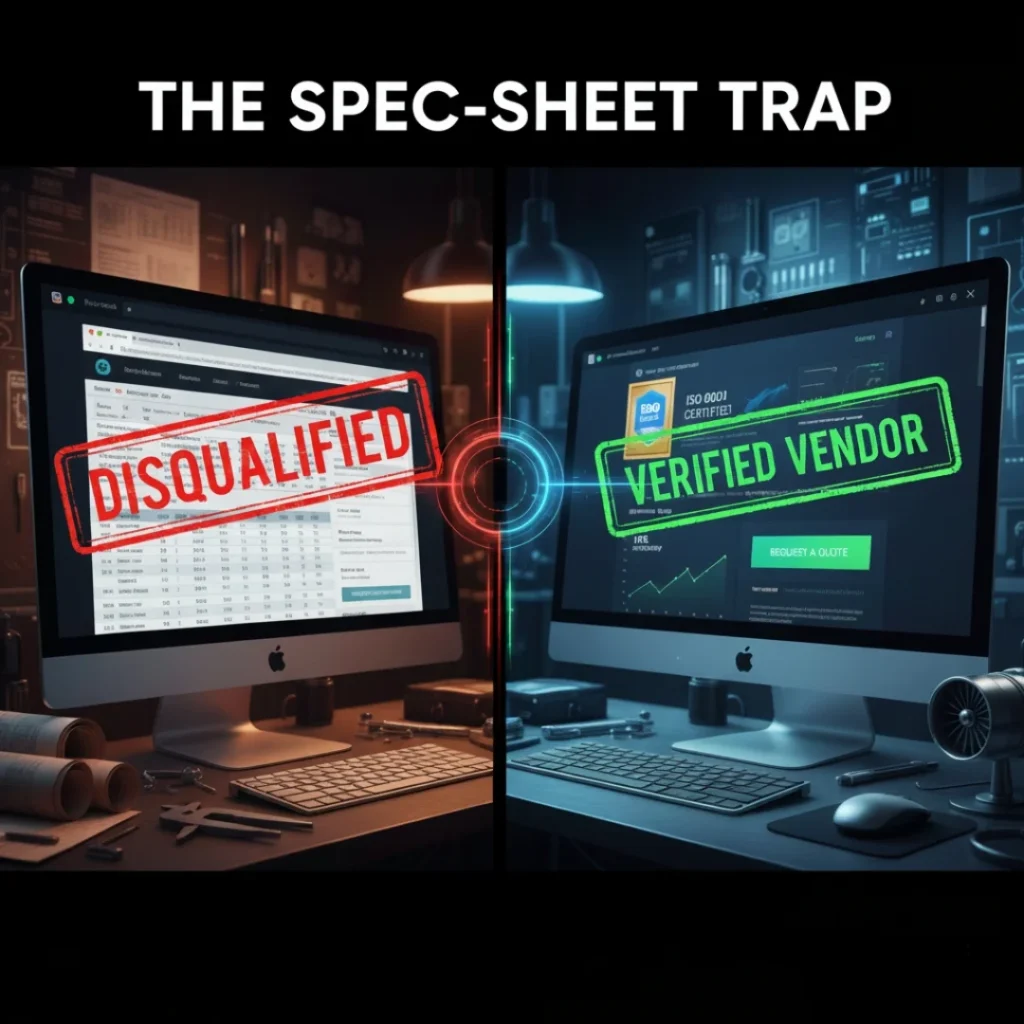
Procurement officers in 2026 are risk-averse. When they evaluate engineering website design, they aren’t looking for a flashy hero video; they are looking for reasons to disqualify you so they can shorten their vendor list.
A “Spec-Sheet” website is a disqualification magnet. When a buyer sees a wall of unoptimized text and part numbers without business context, they perceive three major risks:
- Operational Risk: An outdated engineering design website suggests outdated internal processes and a lack of innovation.
- Friction Risk: If it’s difficult to find your ISO certifications or safety records, they assume it will be difficult to manage your project.
- Technological Risk: If you haven’t mastered responsive web design and search engine optimization, they question your ability to master their complex technical requirements.

2. Technical Debt: The Silent Killer of B2B Growth
Many firms hire a generic digital marketing agency that uses bloated page builders. These tools create “Technical Debt”, inefficient code that clogs your server and kills your Core Web Vitals.
For a mechanical website, speed is a signal of craftsmanship. This is why at Sityn, we specialize in high-performance frameworks like Bricks Builder and Automatic CSS (ACSS).
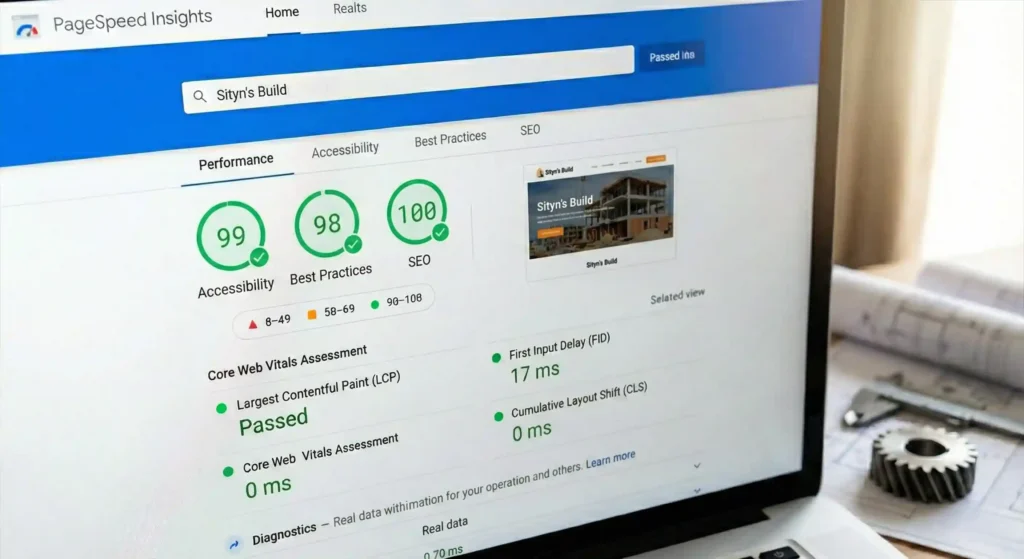
- Clean Code = Trust: Sityn produces clean, semantic HTML that search engines love. Unlike builders like Elementor, it removes unnecessary bloat, leading to 95+ PageSpeed scores. You can see this in action on our recent build for touseef.xyz, where performance was prioritized over visual bloat.
By stripping away the legacy bloat found in standard builders, we ensure your digital infrastructure matches the precision of your workshop. Our approach to Web Design and Development prioritizes clean-code architecture and 95+ PageSpeed scores to pass every procurement audit.
3. Step-by-Step: How to Engineer Your Digital Growth
Transitioning from a “brochure” to a Technical Sales Engine requires a methodical approach. Here is the specific roadmap we use at Sityn to ensure industrial website development leads to actual RFQs:
Step 1: Conduct a “Technical Site Audit”
Before building, you must diagnose. Use tools like Google PageSpeed Insights to measure your Core Web Vitals.
- The Goal: Identify if your industrial website design is hindered by “Page Builder Bloat.” If your mobile score is under 80, your site is actively hurting your reputation.
Step 2: Define Your “Niche Entities”
Don’t just chase high-volume keywords like “engineering.” At Sityn, a leading enterprise search engine optimization firm, we focus on Zero-Volume SEO.
- Action: Identify the specific part numbers, ASTM standards, or niche compliance codes (like ISO 13485 for medical) your buyers search for. This is where the highest quality leads hide.
Step 3: Architect the “Conversion-First” Content
- Action: Rewrite your “Capabilities” page. Move away from a list of machines and toward Application-Based Storytelling.
- The Formula: Detail the Challenge (e.g., “High-heat tolerance in turbine housing”), your Engineered Solution, and the Quantifiable Result (e.g., “Reduced thermal fatigue by 30%”).
Building a high-performance engine is only half the battle; maintaining its peak efficiency is where long-term growth is secured. To ensure your platform remains secure, updated, and lightning-fast as your firm scales, we offer proactive Website Management that handles the technical heavy lifting for you.

4. Digital Transformation in Manufacturing
True digital transformation in manufacturing must extend to how you acquire and manage clients. Whether you are looking for a b2b search engine optimization firm or a saas search engine optimization firm, the goal is a digital transformation strategy that turns your site into a lead-generating engine.
- Product Digitalization: Turn your physical catalog into a searchable, indexed digital resource.
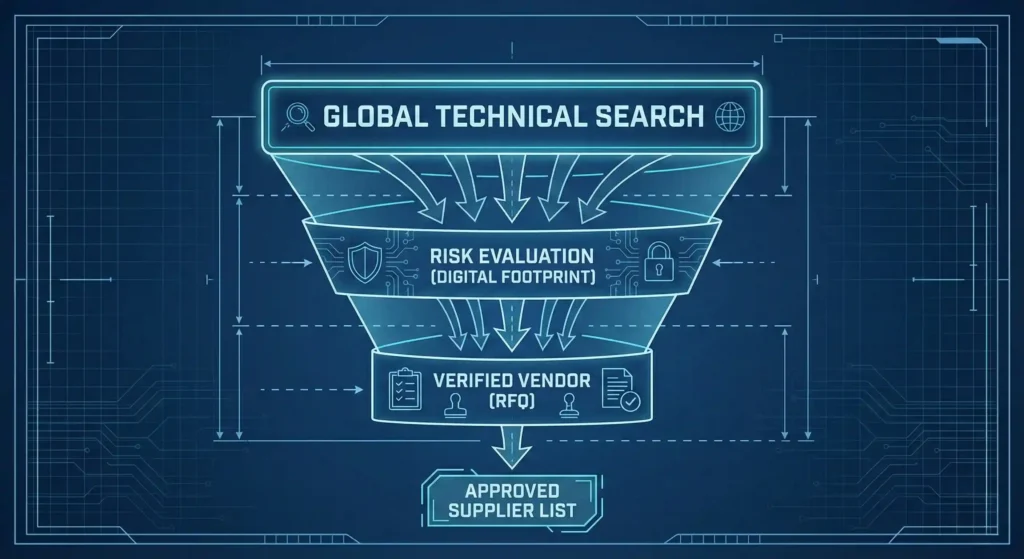
- Technical Procurement Process Optimization: Make it easier for buyers to move through your technical procurement process online by providing interactive configurators or clear “Request for Quote” funnels.
- B2B Branding: Work with a specialized branding agency to ensure your firm’s digital identity matches your technical reputation.
Targeting these high-intent, low-volume terms requires a specialized strategy that generic agencies often overlook. Our data-driven Digital Marketing services are engineered to capture the specific niche entities that your highest-paying clients are actually searching for.
5. Establishing E-E-A-T: Trust is the New Currency
Google’s latest updates emphasize E-E-A-T (Experience, Expertise, Authoritativeness, and Trustworthiness). For an engineering firm, this is critical.
- Experience: Show your team in action. High-quality photography of your shop floor is a visual trust signal website audit for procurement managers.
- Expertise: Every technical blog should have an Author Bio of a real engineer.
- Trust: Back your claims with external citations. According to McKinsey & Company, trust is the primary driver of B2B buyer loyalty.